| |
|
|
 |
Radyo iz ©
|
|
| |
|
|
 Turkce Turkce
 English English
 ANNOUNCEMENTS ANNOUNCEMENTS
|
 |
Welcome...! |
|
Streaming provided at three different formats. Winamp, Windows Media Player and Real Player. In order to listen our radio, your computer must have the one of theme. You can use Winamp, Windows Media Player or Real Player plug in.
 Nostalgic Turkish Songs Online Nostalgic Turkish Songs Online 
|
Welcome to Radio Iz! |
 |
|
|
Welcome to radyo iz, your home for the best mix of Turkish folk, classics and the newest Turkish releases! For 4 years now, Radyo iz has been and still is one of the most listened to and successful Radio Stations on the Internet. Our main goal is to stream radio to you, so we try to keep our website simple and easy to use. Our radio is featuring the best Turkish music all day, every day including songs you can`t hear anywhere else!
|
|
Legendary Master Of TheTurkish Folk Music: Neset Ertas |
|
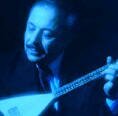 Neset Ertas captures hearts with his Turkish folk songs. Through his voice and his instrument, he continues to pass along traditional values to future generations. Neset Ertas captures hearts with his Turkish folk songs. Through his voice and his instrument, he continues to pass along traditional values to future generations.
When Neset Ertas was asked in an interview how many songs he had composed, he replied, “However many our people have adopted.” The fact is that untold numbers of his folk songs have been interpreted by numerous singers, many of them becoming quite popular. Who knows how many people remember and interpret his songs time and time again despite his having lived almost thirty years in Germany out of the public eye? Perhaps the secret lies in his own words: “From heart to heart there is an unseen way / That goes from soul to soul in secret”
Born in Kirtillar, a village of Kirsehir province, in 1938, Neset Ertas’s love of music was born under the influence of his father Muharrem Ertas, who added tens of folk songs from every genre to the Turkish folk music repertoire. Like the other Abdals of Kirsehir, 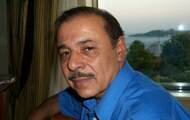 Muharrem Ertas, whose voice and playing had a profound impact on other masters such as Haci Tasan and Cekic Ali, made a living by performing at weddings, where string, percussion and wind instruments such as the keman, darbuka, davul and zurna are played. Neset Ertas too started out playing the keman or fiddle, accompanying his father to weddings as a small boy. Later he gave up the fiddle and took up the three-stringed ‘baglama’. Muharrem Ertas, whose voice and playing had a profound impact on other masters such as Haci Tasan and Cekic Ali, made a living by performing at weddings, where string, percussion and wind instruments such as the keman, darbuka, davul and zurna are played. Neset Ertas too started out playing the keman or fiddle, accompanying his father to weddings as a small boy. Later he gave up the fiddle and took up the three-stringed ‘baglama’.
Together with the other master musicians who live in and around Kirsehir, Neset Ertas, after Muharrem Ertas, Haci Tasan and Cekic Ali, is the leading representative today of the Abdals (tribal nomads who make a living as musicians), who perform the music of the Kirsehir region in their own unique style of singing and playing the traditional string instrument known as the ‘saz’. And the primary factor that confers this title on Ertas are the region’s wild and haunting ‘Bozlak’ folk songs which he sings to the accompaniment of his own saz, and the songs in folk style, each one more popular than the last, that he has composed himself.
Traditional Turkish Puppets Shadow Play Karagoz and Hacivat
 Karagöz (meaning blackeye in Turkish) and Hacivat (also written Hacivad) are the lead characters of the traditional Turkish shadow play, popularized during the Ottoman period. The central theme of the plays are the contrasting interaction between the two main characters: Karagöz represents the illiterate but straightforward public, whereas Hacivat belongs to the educated class, speaking Ottoman Turkish and using a poetical and literary language. Karagöz's native wit always gets the better of Hacivat's learning (but his money-making ventures always fail). Next... Karagöz (meaning blackeye in Turkish) and Hacivat (also written Hacivad) are the lead characters of the traditional Turkish shadow play, popularized during the Ottoman period. The central theme of the plays are the contrasting interaction between the two main characters: Karagöz represents the illiterate but straightforward public, whereas Hacivat belongs to the educated class, speaking Ottoman Turkish and using a poetical and literary language. Karagöz's native wit always gets the better of Hacivat's learning (but his money-making ventures always fail). Next...
|
INTERNATIONAL 23rd APRIL CHILDREN’S FESTIVAL
|
|
 23rd April Children’s Festival is a children’s festival that Mustafa Kemal Atatürk, the founder of the Turkish Republic, bestowed to Turkish children and that has been celebrated among countries since 1979. The first celebration of it was held on April 23rd, 1920, when the Turkish Grand National Assembly (TBMM) was founded. It is organized so as to improve the feelings of fraternity, love and friendship among children and also to contribute to a world, where they will live in peace. 23rd April Children’s Festival is a children’s festival that Mustafa Kemal Atatürk, the founder of the Turkish Republic, bestowed to Turkish children and that has been celebrated among countries since 1979. The first celebration of it was held on April 23rd, 1920, when the Turkish Grand National Assembly (TBMM) was founded. It is organized so as to improve the feelings of fraternity, love and friendship among children and also to contribute to a world, where they will live in peace.
The greatest dream of Atatürk, who saved his country from occupations, realized revolutions in almost every field and thanks to this changed the point of view of his nation, was modernization, namely a country that has become industrialized, has a strong middle class and where modern people are dominant. He considered this important as democracy functions well in all modern countries that have a strong economy. Atatürk knew that industry was weak in the Republic he founded and therefore, he tried to achieve modernization through the revolution of education and thus entrusted Turkey to the children and young people. However, he knew that modernization could not be immediately achieved. So, he envisaged that his ideal could be achieved by children educated at schools depending on positive sciences. He believed in his people and he was a man who lived what he believed. This is the main philosophy of 23rdApril. As it can be seen now, educated young people who have improved themselves have made significant contributions to the modern Turkey. Turkey of today has developed in years and joined the group of modern countries.
Children aged between 8-14 participate in the international festival. The program covers the period between approximately April 16th and April 26th. Each country group is made up of an about 20 children and 6 leaders. Guests arrive in the cities where the organization will be held by April 15th. Each group, through primary education schools, is housed by a host family with their peer Turkish friends in a warm and affectionate environment in the city where the festival is held. In this way, the children of the world recount the positive traits of Turkish people to their own families and friends when they return to their countries. This certainly makes Turkish people happy. The festival begins with a festival parade every year. In the procession children, in their national outfits, play their traditional music and dance on the largest street of the city. Later, guest countries perform outdoor shows in big parks, and unit with Turkish people. The festival week goes ahead with children’s visit to the mausoleum of Atatürk, the great leader who awarded this festival to children, in Ankara, the capital city of Turkey. After this visit, children are accepted by the President of the Republic of Turkey, the President of Turkish National Grand Assembly.
Source:TRT
|
 Turkish consumers are launching a boycott of French goods following the French parliament’s decision to pass the Armenian bill, which foresees punishment of those denying an Armenian genocide. Some Turkish citizens are refusing to buy products upon learning they are French. Turkish consumers are launching a boycott of French goods following the French parliament’s decision to pass the Armenian bill, which foresees punishment of those denying an Armenian genocide. Some Turkish citizens are refusing to buy products upon learning they are French.
Consumers associations called on consumers to boycott French goods while some chain stores are putting labels on French goods to inform consumers of their French origin.
Kiler, a leading retailer, has decided not to sell French goods. Afra Shopping Center, a supermarket chain operating in Konya, is putting labels on approximately 100 French products that read, “This is a French product.”
The French store Carrefour, a partnership in Turkey with Sabanci Holdings, has been the most affected by the protests. The number of cars parked at the shopping center has been declining daily. Fewer customers are coming to the shopping center with every passing day.
There has been a 30 percent decrease in the sales of Total oil, which is on top of the Consumers Association’s list.
French Goods Removed from Stores
Kiler Retail Chain, which has 130 stores in Turkey, suspended sales of French products. The retailer chain cancelled its contracts with Danone and French cosmetics companies and also removed other French goods from their shelves.
Kiler, which means cellar in Turkish, will put posters criticizing the bill approved by the French parliament on the shelves left empty by the absent French products. Officials of the chain asserted that reactions from their customers were highly influential in making this decision.
|
|
A Brief Information About The Turkish Folk Music |
|
|
|
As in most societies we come across Turkish folk music dealing with daily life and Turkish classical music, the music of the courts. A folk song usually deals with things of daily life, be it a work song, a story-telling ballad, a love song, or a dance song.
The subject of the song usually reflects the way people live and work, the language they speak, the instruments they play. Folk songs called "türkü", reflects the events experienced by Turks. Türkü changes with the changing times.
|
Folk songs always have a story behind them. Sometimes it is a love story and sometimes it is the expression of deep emotions even though modern and the latest technical developments are used to convey the powerful feelings of a regional people with traditions stretching back for centuries. You can feel the sorrow of a mother asking about her son lost in the war, or a young newly wed couple not wanting to leave each other alone for fear that something may happen to one or the other. The regional mood also affects folk songs. For example folk songs from the Black Sea are lively in general and express the customs of the region. Songs about betrayal have an air of defiance about them instead of sadness.
|

Make Your Home Page
|